


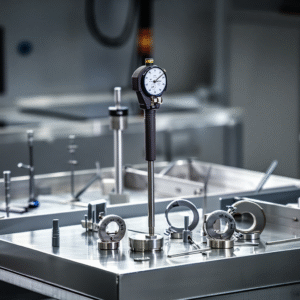
Bore Gauge: Essential Tool for Calibration and Precision Measurement
A Bore Gauge is a precision measuring instrument designed to measure the internal diameter of holes, cylinders, or pipes with high accuracy. In industrial applications, the Bore Gauge plays a crucial role not only in quality control but also in the calibration of measuring instruments such as micrometers and vernier calipers.
How a Bore Gauge Works
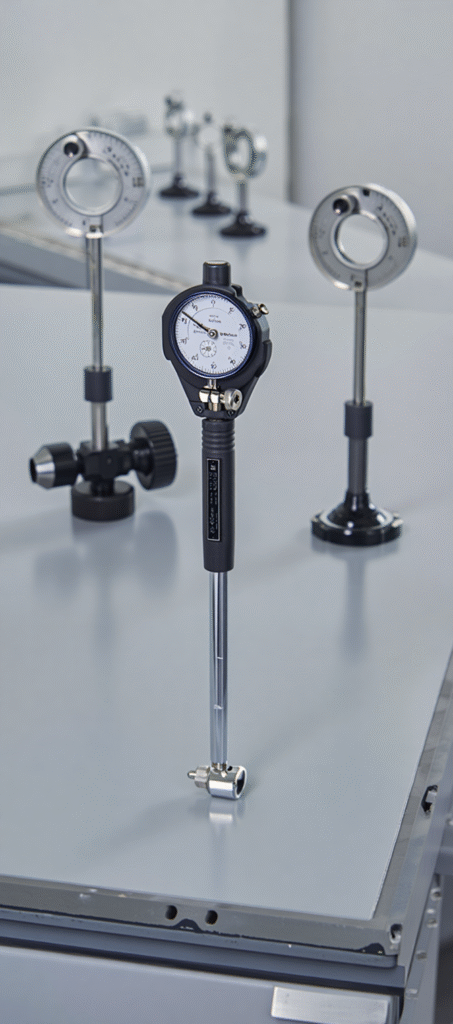
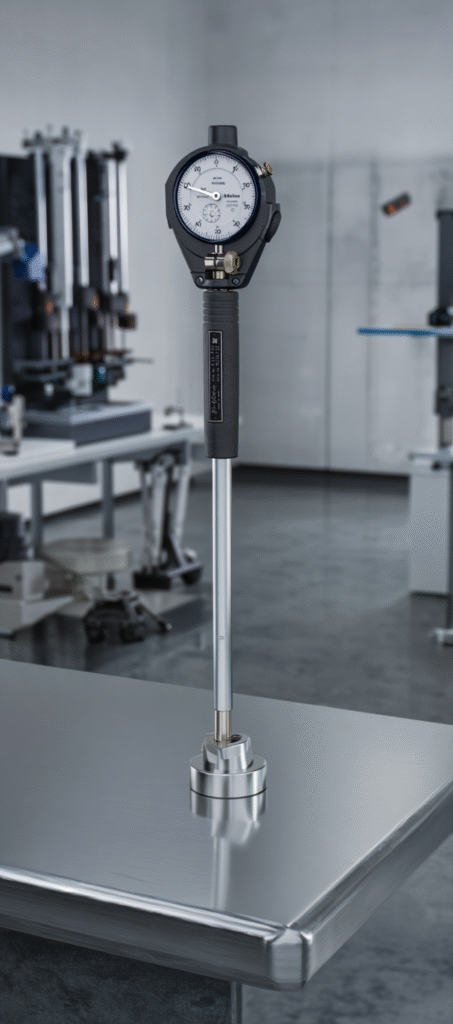
The operation of a Bore Gauge relies on a contact mechanism that expands inside a hole. This movement is transferred to either a dial indicator or a digital indicator, which displays the measurement. By comparing the reading against a known standard, technicians can determine if a tool or workpiece meets required specifications.
For calibration purposes, the Bore Gauge is often set using gauge blocks or ring gauges. This ensures the instrument provides repeatable and reliable results, a requirement in laboratories following ISO standards.
Types of Bore Gauges
Dial Bore Gauge – Features a dial indicator that shows deviation from the set size.
Digital Bore Gauge – Displays measurement digitally, reducing reading errors.
Small Hole Gauge – Used for very small diameters, requires a micrometer for final measurement.
Telescopic Bore Gauge – Spring-loaded arms that lock in place, later measured with a micrometer.
Why Bore Gauge is Important in Calibration
A Bore Gauge is vital in calibration laboratories because it ensures that other measuring tools remain accurate. The process typically involves:
Zero-setting the Bore Gauge using a ring gauge standard
Taking repeated measurements to confirm stability
Comparing results with other measuring tools for cross-verification
This procedure guarantees that instruments used in production lines comply with strict tolerances.
Advantages of Using Bore Gauge
High precision: Accuracy can reach micrometer levels.
Ease of use: Quick setup and repeatable results.
Reliability: Trusted in calibration labs for decades.
Versatility: Works for different bore sizes with interchangeable anvils.
Applications of Bore Gauge in Industry
Automotive industry: Cylinder bore measurement
Aerospace: Component inspection for engines
Calibration labs: Verifying accuracy of micrometers and calipers
Manufacturing: Quality control of machined parts
External and Internal Resources
External Reference: Mitutoyo Bore Gauge Guide (DoFollow link)
Internal Reference: You can link this page to your existing “Calibration Services” section or “Measurement Tools” article within your website.
Conclusion
The Bore Gauge is more than a simple measuring tool. It is an essential calibration instrument that guarantees accuracy across multiple industries. By integrating Bore Gauges into your quality system, you ensure compliance with international standards, improve efficiency, and maintain trust in your measurement results.