


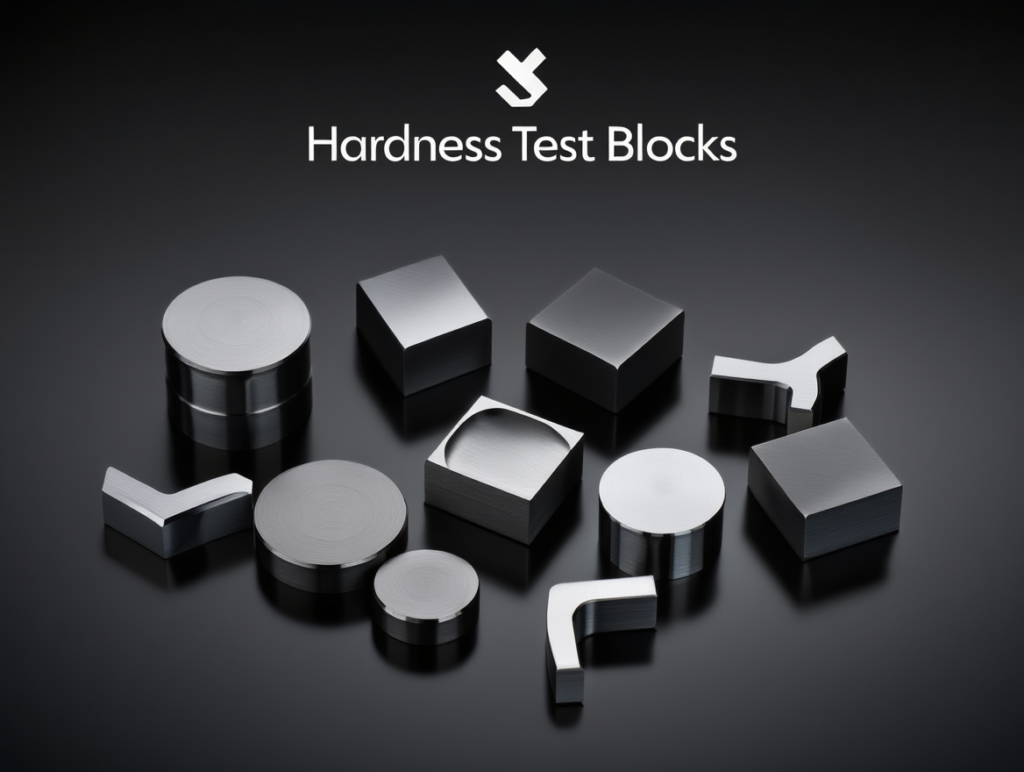
Hardness Test Blocks: Complete 2500-Word Guide to Types, Certification, Calibration, and Best Practices
Hardness test blocks are among the most important reference tools used in material testing and industrial quality control. These standardized blocks allow technicians, engineers, laboratories, and manufacturers to verify the accuracy of hardness testers, maintain measurement consistency, and comply with international standards. Whether you are working with Rockwell, Brinell, or Vickers testing equipment, hardness test blocks are essential for ensuring that every hardness value you obtain is trustworthy and traceable.
This long-form guide provides an in-depth explanation of what hardness test blocks are, how they are made, how they should be used, their role in calibration systems, and the benefits they bring to laboratories and production environments. It also covers standards, traceability requirements, error prevention, maintenance principles, and modern practices for digital calibration management. If your job involves material hardness testing or machine calibration, this comprehensive guide will give you a complete understanding of hardness test blocks and how to use them effectively.
Introduction to Hardness Test Blocks
Hardness testing is one of the most widely used inspection methods in the metalworking and manufacturing industries. Because hardness often correlates with other mechanical properties such as strength, wear resistance, and heat treatment performance, ensuring accurate hardness measurement is essential for product reliability and safety.
Hardness test blocks serve as “known reference points.” They are manufactured with controlled hardness values and certified by accredited laboratories. These values act as benchmarks for checking whether a hardness tester is functioning correctly. If a hardness tester produces measurements that deviate from the certified value of a test block, the machine may need adjustment, maintenance, or full calibration.
The use of hardness test blocks prevents incorrect hardness readings from affecting production quality or causing material failures. They are required for ISO-certified companies, accredited laboratories, and any organization that must demonstrate measurement traceability.
Why Hardness Test Blocks Are Critical in Industry
Hardness test blocks play a vital role in ensuring measurement consistency across various industries. Some of the reasons for their importance include:
Ensuring Machine Accuracy
Hardness testers can drift due to wear, misuse, contamination, or mechanical issues. Regular verification using hardness test blocks ensures that the machine maintains accuracy over time. This protects against incorrect readings that may compromise product quality.
Calibration and Traceability
Most material testing laboratories operate under standards such as ISO 17025, ISO 9001, ASTM, or specific industry regulations. These standards require:
• traceability to national/international standards
• use of certified reference materials
• documented calibration history
Hardness test blocks act as certified reference materials, forming a key part of a traceable calibration system.
Reducing Production Errors
Incorrect hardness values can lead to serious consequences such as:
• components failing in service
• heat-treated parts not meeting specifications
• rejects and rework
• damaged reputation or safety issues
Using hardness test blocks regularly helps detect drift early and reduces these risks.
Compliance with Audits
ISO auditors and customer audits typically require evidence that hardness testing equipment has been verified and calibrated. Hardness test blocks and their certificates provide the documentation required for compliance.
Cost Efficiency
Calibration labs may recalibrate machines annually, but day-to-day or weekly verification must still be performed internally. Hardness test blocks allow companies to do this quickly and affordably without needing external services.
Types of Hardness Test Blocks
Hardness test blocks come in several categories depending on the testing method. Each type is designed with specific materials, surface finishes, and hardness ranges.
Rockwell Hardness Test Blocks
Rockwell is one of the most commonly used hardness scales. Rockwell hardness test blocks provide reference values for scales such as:
• HRC (Rockwell C) for hardened steels
• HRB (Rockwell B) for softer steels and copper alloys
• HRA (Rockwell A) for thin or hard surface layers
• Other scales: HR15N, HR30N, HR45N, HR15T, HR30T
Characteristics of Rockwell blocks:
• Manufactured from hardened steel
• Heat-treated to achieve stable hardness
• Precision-polished to achieve smooth test surfaces
• Certified according to ASTM E18 or ISO 6508
Rockwell blocks are normally supplied as sets covering low, medium, and high hardness values.
Brinell Hardness Test Blocks
Brinell hardness testing uses a ball indenter and applies a relatively large test load. Brinell hardness test blocks support values usually in the range:
• 100 HBW
• 150 HBW
• 200 HBW
• 300 HBW
• 400 HBW
Characteristics:
• Suitable for cast iron, aluminum, copper, soft steel
• Provide large indentations, improving repeatability
• Certified to ASTM E10 or ISO 6506
Brinell blocks are typically made from steel or aluminum alloys depending on hardness level.
Vickers Hardness Test Blocks
Vickers testing uses a diamond pyramid indenter and supports a much wider range of materials. Vickers blocks can be microhardness (HV0.1 to HV1) or macrohardness (HV5 to HV100).
Characteristics:
• Extremely fine surface finish
• Ideal for coatings, heat-treated parts, thin sections
• Certified under ASTM E92 or ISO 6507
Vickers blocks are widely used in laboratories that require high-precision hardness testing.
How Hardness Test Blocks Are Manufactured
Hardness test blocks undergo a controlled manufacturing process to ensure accuracy and stability.
Material Selection
Manufacturers select materials that can maintain stable hardness over time. Common choices include:
• Alloy steels
• Tool steels
• Stainless steels
• Aluminum alloys (for Brinell)
These materials must resist surface deformation and microstructural changes.
Heat Treatment
Blocks undergo controlled heat treatment to achieve their target hardness. The process must minimize residual stress and ensure uniform hardness across the entire block.
Surface Grinding and Polishing
The surface is prepared to meet strict roughness and flatness requirements. This ensures the indenter contacts a perfectly consistent surface for repeatable results.
Precision Testing and Certification
Each block is tested multiple times by accredited laboratories. The final certificate includes:
• mean hardness value
• standard deviation
• uncertainty value
• traceability chain (NIST, UKAS, JCSS etc.)
Each block must fall within strict tolerances before being approved.
How to Use Hardness Test Blocks Correctly
Correct usage is critical for obtaining reliable verification results. The following procedure is recommended:
Preparation
• Clean the block surface
• Clean the indenter and anvil
• Set the correct hardness scale and test parameters
Any contamination can affect readings.
Performing Verification
• Test 3–5 different positions
• Avoid edges or previously indented areas
• Use consistent loading procedures
The average value should fall within the block’s tolerance range.
Interpreting Results
If the test values fall:
• within tolerance → machine is functioning properly
• slightly outside tolerance → re-test; check for errors
• far outside tolerance → machine requires calibration or repair
All results should be documented for traceability.
Common Causes of Incorrect Readings
Incorrect hardness readings may occur due to machine problems, operator errors, or poor-quality test blocks.
Mechanical Issues
• Worn indenter
• Loose machine components
• Damaged anvils
• Incorrect loads
These issues directly affect hardness.
Environmental Conditions
• Temperature changes
• Vibrations
• Humidity
Hardness testers must be kept in controlled environments.
Operator Handling Errors
• Using the wrong scale
• Testing on a scratched or dirty surface
• Using a block beyond its lifespan
Training reduces these errors significantly.
How to Store and Maintain Hardness Test Blocks
Proper storage extends the lifespan of test blocks and maintains accuracy.
Protection Against Corrosion
Blocks should be stored in:
• dry environments
• original protective cases
• rust-preventive oil (for steel blocks)
Moisture can damage the surface and affect results.
Avoiding Surface Damage
Never stack hardness blocks or place items on top of them. Scratches or dents can invalidate the block.
Rotation of Test Areas
To avoid creating repeated indentations, technicians should rotate the block and use fresh sections for each test.
Calibration Requirements and Industry Standards
Hardness testers and test blocks are governed by major standards such as:
• ASTM E18 (Rockwell)
• ASTM E10 (Brinell)
• ASTM E92 (Vickers)
• ISO 6506 / 6507 / 6508 (international hardness standards)
• ISO/IEC 17025 (laboratory accreditation)
These standards ensure that all hardness measurements remain traceable and consistent globally.
Digital Record Keeping and Calibration Management
Modern laboratories increasingly use digital systems to track hardness measurements. Software solutions allow:
• automatic logging of test values
• long-term trend analysis
• alerts for machine drift
• digital storage of calibration certificates
• simplified audit documentation
Integrating hardness test blocks with digital workflows improves productivity and compliance.
Benefits of Using Hardness Test Blocks
Consistent Measurement Accuracy
Regular verification ensures that hardness testers produce correct values every time.
Better Quality Control
Incorrect hardness can lead to product failures, so using hardness test blocks minimizes risk.
Smooth Audit Processes
When auditors request proof of calibration, hardness test block certificates and logs provide immediate evidence.
Reduced Maintenance Costs
Early detection of machine drift reduces the need for expensive repairs.
Long-Term Reliability
Industries depend on stable hardness values for heat treatment validation, process control, and incoming material inspection.
Conclusion
Hardness test blocks are essential tools for verifying the performance and accuracy of hardness testing machines. They provide a stable, traceable reference point for quality control and calibration. With proper handling, storage, and regular use, these blocks help maintain measurement reliability across all major hardness testing methods—Rockwell, Brinell, and Vickers.
By following best practices, complying with standards, and integrating digital calibration workflows, laboratories and manufacturers can greatly enhance the integrity of their hardness testing systems. Whether you operate a small workshop or a fully accredited testing laboratory, hardness test blocks remain one of the most cost-effective and reliable tools for ensuring measurement accuracy and maintaining product quality.