


Optical Flats and Optical Comparators: A Complete Guide for Precision Metrology
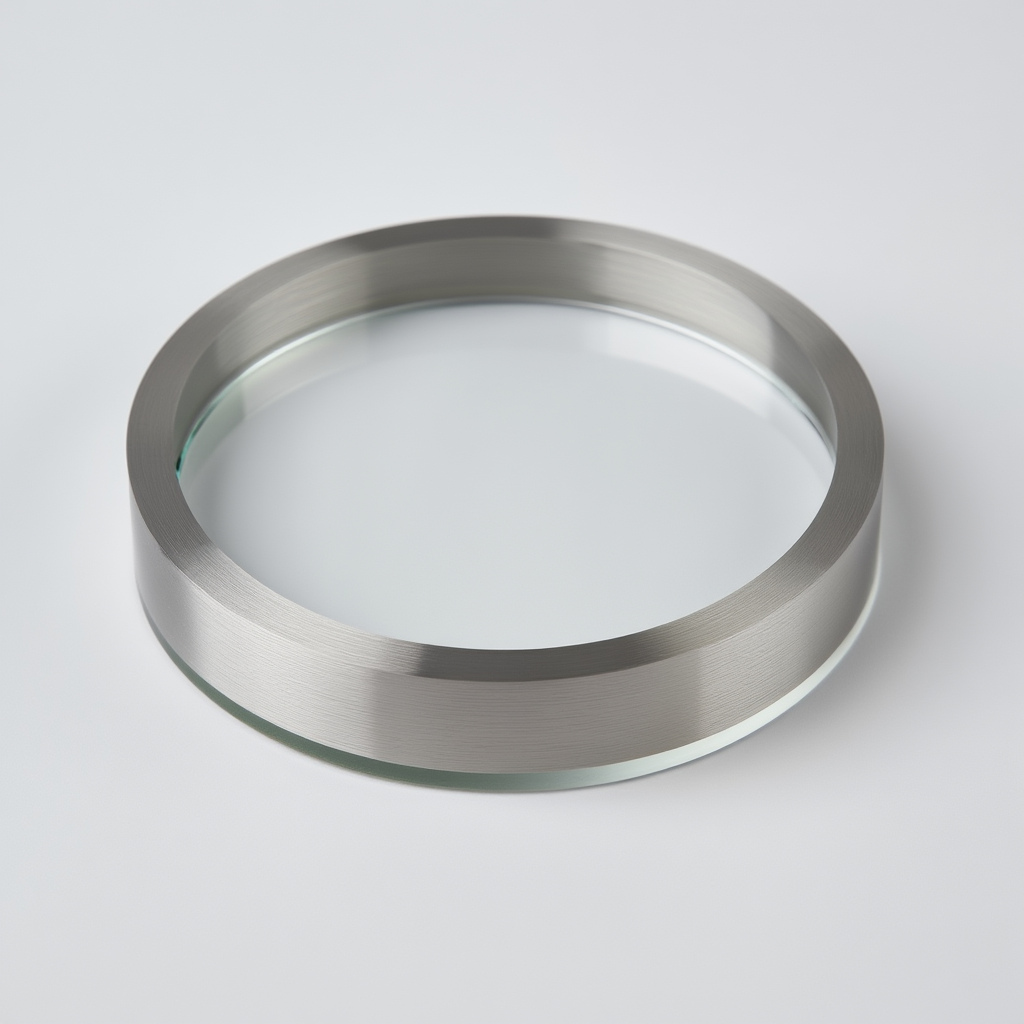
Optical Flats and Optical Comparators
are two of the most widely used precision measurement tools in metrology and industrial quality control.
These instruments help engineers, QA inspectors, and calibration technicians evaluate flatness, parallelism, shapes, angles, and dimensional accuracy without damaging the workpiece. This article explains how both tools operate, why they are essential, and how to choose the right instrument for each type of measurement.
1. What Are Optical Flats and Optical Parallels?
Optical Flats are highly polished glass or fused-silica plates designed to have extreme surface flatness. They are commonly used to test flatness and parallelism on precision components by observing interference fringe patterns. Optical Parallels are similar in design but are specifically made for checking thickness uniformity and parallel surfaces by placing the workpiece between two polished optical surfaces.
Key Characteristics of Optical Flats
• Ultra-high flatness, often within λ/10 to λ/20
• Made from fused silica or quartz for thermal stability
• Used to examine surfaces using interference fringes
• Non-contact testing reduces risk of scratches or deformation
How Optical Flats Work
1. Clean both the optical flat and the workpiece surface.
2.Place the flat gently on the workpiece.
3. Observe the interference fringe pattern created by monochromatic light.
4. Analyze the lines: their shape reveals the condition of the surface.
5. Count the number of fringes to determine deviation in microns.
Interference Fringe Interpretation
• Straight parallel lines: surface is flat
• Curved lines: surface is convex or concave
• Distorted or twisted lines: surface has twist or warping
• Uneven spacing: surface flatness is inconsistent
Industrial Applications
• Calibration laboratories
• Mold and die surface inspection
• Optical component manufacturing
• Precision machining and sealing surfaces
• Final QC for high-flatness components
Advantages
• Extremely high accuracy
• No mechanical wear
• Long lifespan
• Can detect micro-level deviations normal tools cannot see
2. What Is an Optical Comparator?
An Optical Comparator, also known as a Profile Projector, is an instrument that magnifies a workpiece profile onto a screen using light and lenses. It allows operators to measure geometric features, angles, radii, and contours quickly and non-destructively. It is especially suitable for small and precise parts used in mass production.
How Optical Comparators Work
1. A light source shines through (or onto) the part.
2. The lens magnifies the silhouette or surface.
3. The enlarged image appears on a screen or digital display.
4. Operators compare the profile with overlays, CAD drawings, or digital measurement tools.
5. Measurements such as length, radius, and angle are taken with micrometer stages or digital readouts.
Common Measurement Modes
• Profile Measurement: edges, contours, tool shape
• Dimensional Measurement: lengths, gaps, and heights
• Geometric Inspection: angles, radii, tapers
• Surface Inspection: burrs, chips, wear, surface defects
Advantages of Optical Comparators
• Non-contact measurement ideal for fragile parts
• Highly visible magnified images
• Suitable for complex geometric shapes
• Supports both transmitted and reflected illumination
Industrial Uses
• Inspection of cutting tools, inserts, and carbide parts
• Measurement of electronic components
• QC for CNC-machined parts
• First-article inspection
• Verifying parts in high-volume production
3. Differences Between Optical Flats and Optical Comparators
| Feature | Optical Flats / Parallels | Optical Comparators |
|---|---|---|
| Purpose | Flatness & parallelism inspection | Shape, profile & dimension measurement |
| Principle | Interference fringe patterns | Magnified projection using optics |
| Accuracy | Extremely high | High (depends on lens power) |
| Best For | Ultra-flat surfaces | Complex shapes & profiles |
| Contact | Minimal/light contact | Non-contact |
4. When to Use Each Tool
• Need to check if a surface is truly flat → Use Optical Flat
• Need to measure a radius, angle, contour, or profile → Use Optical Comparator
• Inspecting tools, gears, inserts, or precision mechanical parts → Comparator
• Inspecting sealing surfaces, molds, or high-precision plates → Optical Flat
• Need micro-level accuracy → Optical Flat is superior
5. Summary
Optical Flats and Optical Comparators are essential instruments in modern metrology and quality assurance. Optical Flats provide ultra-high accuracy for evaluating surface flatness and parallelism using interference patterns, while Optical Comparators allow fast and non-contact inspection of part profiles, dimensions, and geometric shapes. Having both tools in a QC environment ensures precise, reliable, and professional inspection results across a wide range of industrial applications.
A factory or laboratory that uses both instruments gains higher confidence in product quality, reduces errors, and improves consistency in manufacturing.